
Fill
Containers load at the plant fill cluster while liquefaction continues into storage.

Operations
Altaris converts pipeline-quality natural gas into LNG at a compact Cameron County site, then dispatches it in cryogenic ISO containers. The plant is designed to grow by adding factory-built units — not by pouring a second mid-scale train.
The plant
Inlet gas is metered and treated, boosted to liquefier inlet pressure, and cooled in parallel modular units. LNG is collected, stored, and loaded at ISO fill stations with custody-transfer metering. An in-house logistics pattern — fill, transit, standby — keeps customer tanks from going dark.
Equipment
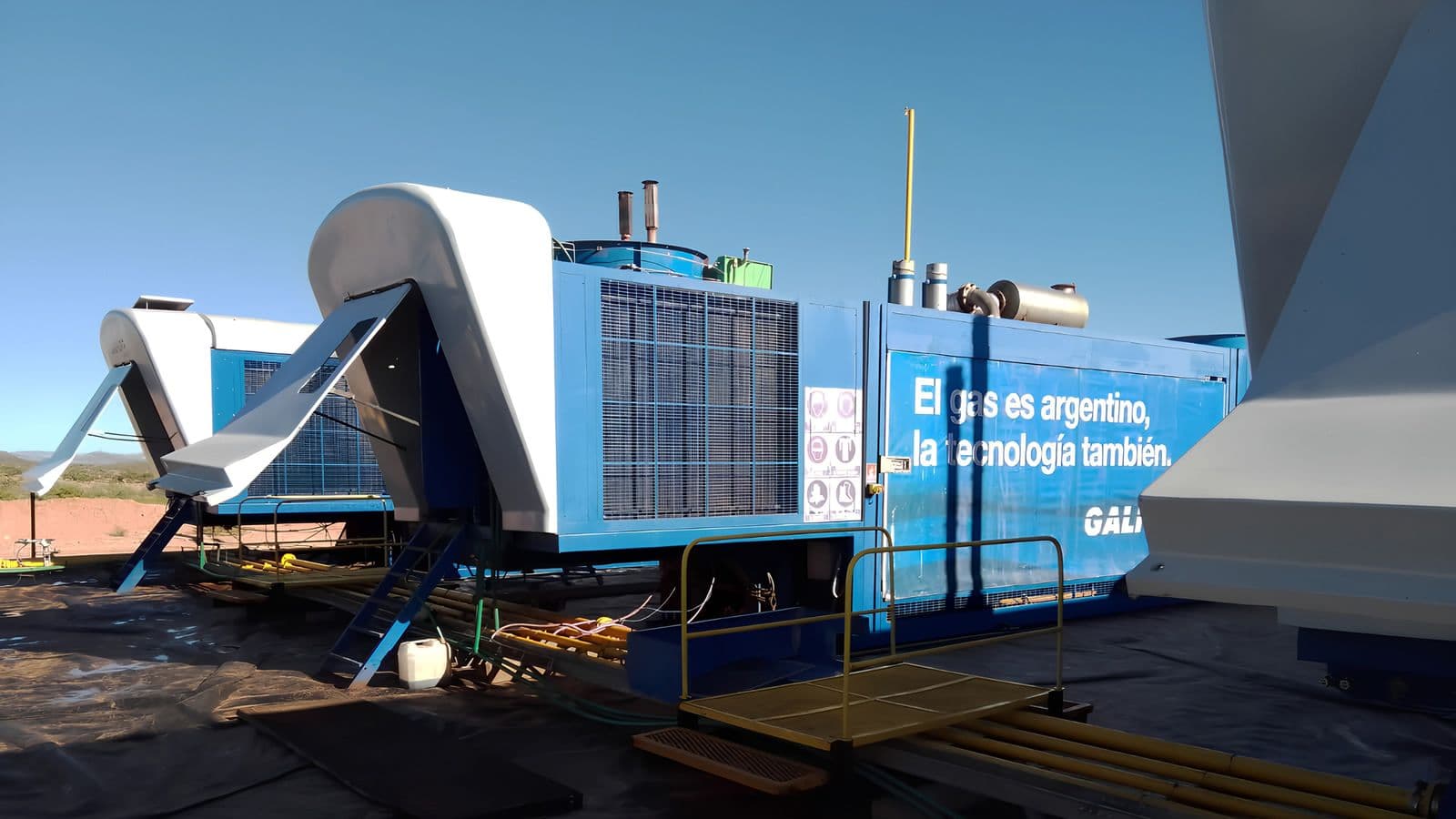
Modular liquefaction equipment — factory-built process modules.
Process
01
Pipeline-quality natural gas is metered into the facility from regional transmission infrastructure serving the San Benito area.
02
A dedicated treating skid removes water, carbon dioxide, and sulfur compounds so the gas is ready for cryogenic service.
03
Factory-built modular liquefiers cool methane to liquid. Units run in parallel, so capacity can be added without rebuilding the plant.
04
LNG moves to insulated storage and fill stations, creating a buffer between production and the truck schedule.
05
Cryogenic ISO containers are loaded, weighed, and sent out as a virtual pipeline — fill, transit, and standby in rotation.
ISO virtual pipeline
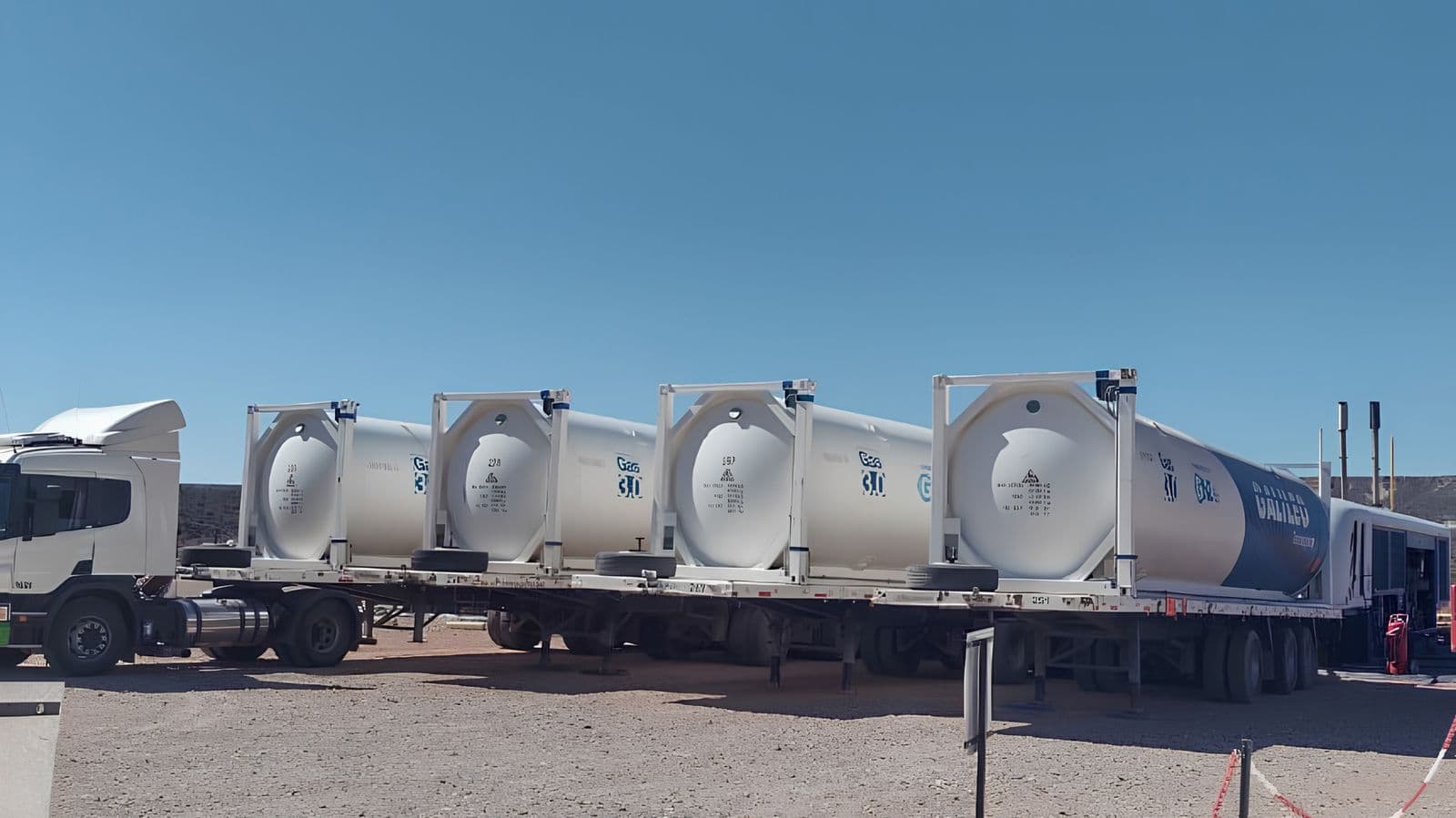
Cryogenic ISO tanks are intermodal, chassis-compatible, and built for highway movement. They are buffer storage at the plant, the delivery vehicle for remote industrial and wholesale customers, and the way Altaris serves sites that will never see a gas lateral. Loading uses cryogenic arms and digital scales so each dispatch is a measured custody transfer.
Equipment
ISO-container logistics — cryogenic tanks moved by trailer.
Containers load at the plant fill cluster while liquefaction continues into storage.
Highway routing on I-69E / US-77 toward industrial parks, the port, the border, and Boca Chica.
A tank at the customer or in the yard keeps supply continuous when a truck is on the road.
Yard
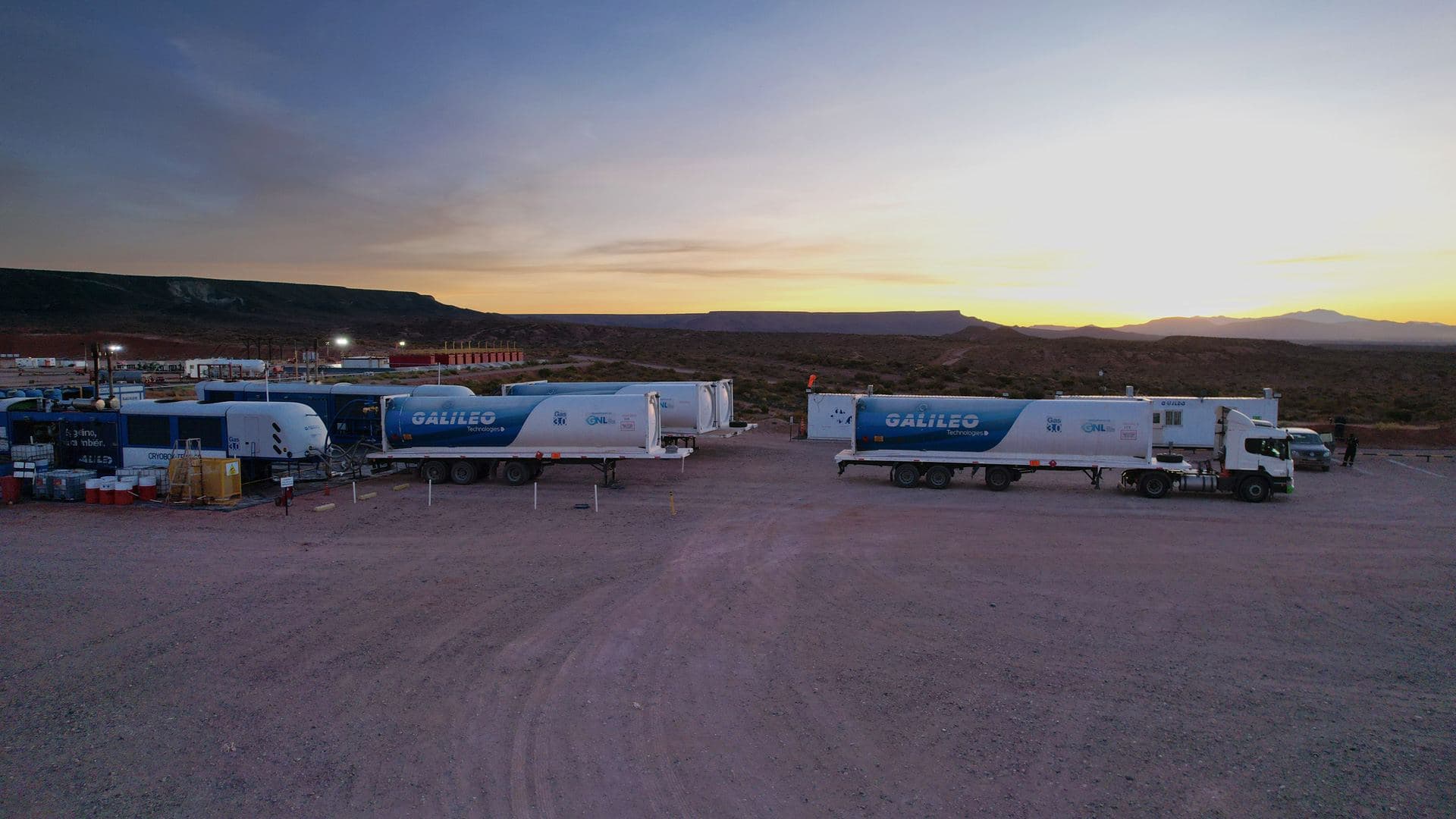
Reference installation of modular liquefaction equipment and ISO-container logistics — the same class of plant and dispatch Altaris is building for Cameron County.
Equipment
Modular liquefaction and ISO-container logistics.
Compliance & safety
Facility design follows the standard for LNG production, storage, and handling as adopted by the Texas Railroad Commission.
Siting, safety, and emergency-response planning are aligned with PHMSA / DOT requirements for LNG facilities (49 CFR Part 193).
Cryogenic vessels and related equipment are specified to ASME pressure-vessel practice for U.S. service.
Classified-area electrical design and a plant-wide emergency shutdown system are part of the operating basis — not an add-on.
Stationary engines and plant sources are planned under Texas Commission on Environmental Quality air-permitting requirements.
ISO fill stations use cryogenic loading arms and custody-transfer metering so every dispatch is measured, not estimated.
Location
The site sits on the I-69E / US-77 corridor with highway reach to the aerospace cluster, the Port of Brownsville, and the U.S.–Mexico ports of entry. Regional transmission infrastructure serves the San Benito area; interconnect and utility work is part of project development.
Cameron County, Texas
The plant is planned for the San Benito area — a production point inside the market, not a terminal two states away.
I-69E / US-77 corridor
Highway access north through the Valley and south toward the ports of entry, without a dedicated rail or marine load-out to start.
Boca Chica aerospace cluster
About 40 miles — under an hour — to the launch and test complex that has made Cameron County a methane demand center.
Port of Brownsville
About 28 miles to the port, opening marine bunkering and waterfront industrial customers.
U.S.–Mexico border
About 10 miles to the border, with routing toward the Los Indios Free Trade Bridge and the Reynosa–McAllen industrial belt.
An underserved gas market
Cameron, Hidalgo, Willacy, and Starr Counties still pay a premium for delivered diesel, propane, and CNG relative to pipeline-served Texas.
Industrial, fleet, virtual-pipeline, aerospace, food-and-beverage, and marine customers — the commercial team will follow up.